Managing a modern business involves much more than selling products or services. Businesses need to manage customers, employees, projects, tasks, sales activities, invoices, support requests, and everyday operations while maintaining accurate business information. When these activities are handled through spreadsheets, emails, disconnected applications, and manual processes, productivity can suffer.
This is where Business Management Software can make a significant difference. A centralized platform can bring important business functions together, helping teams organize information, improve collaboration, automate repetitive activities, and make better decisions.
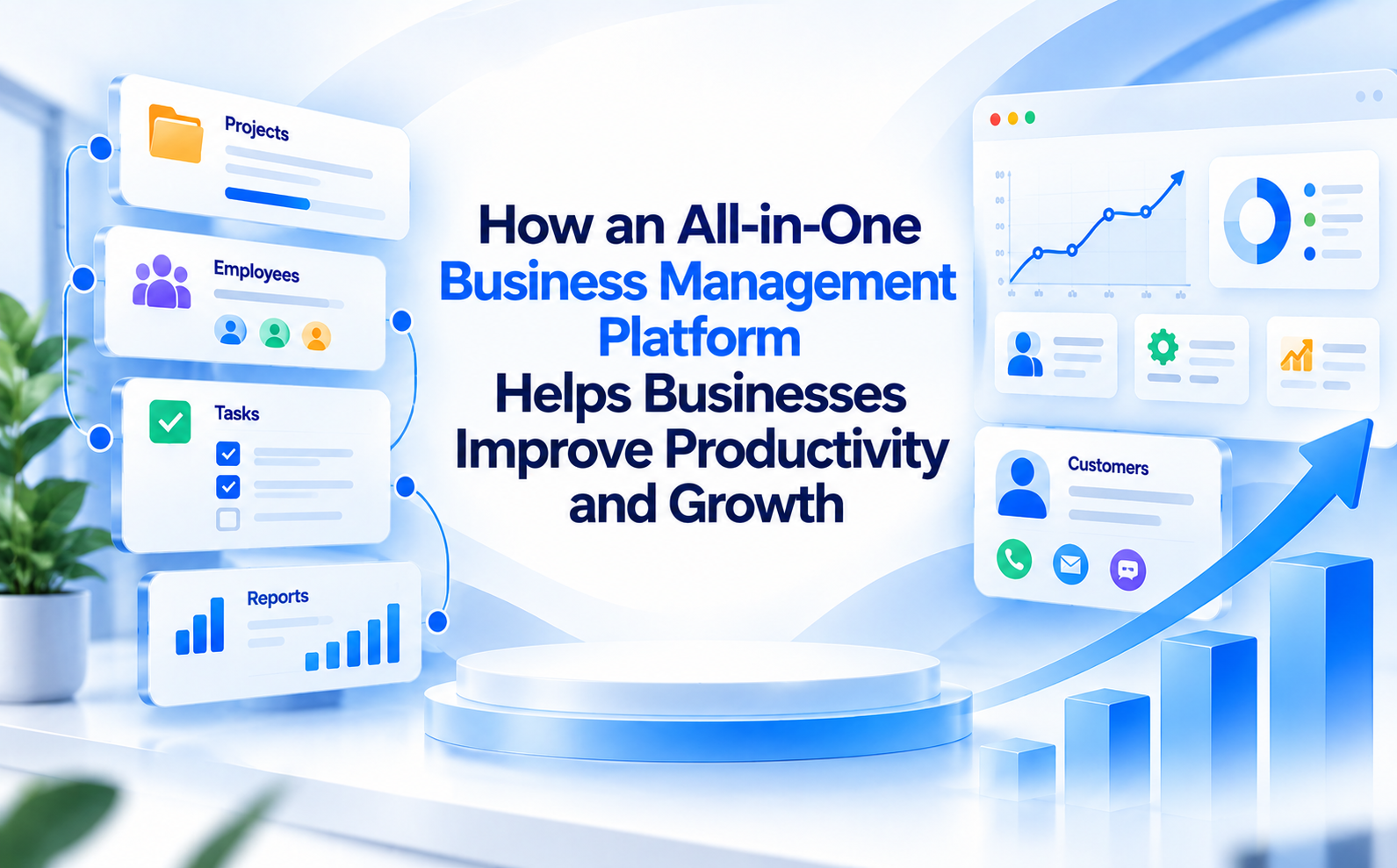
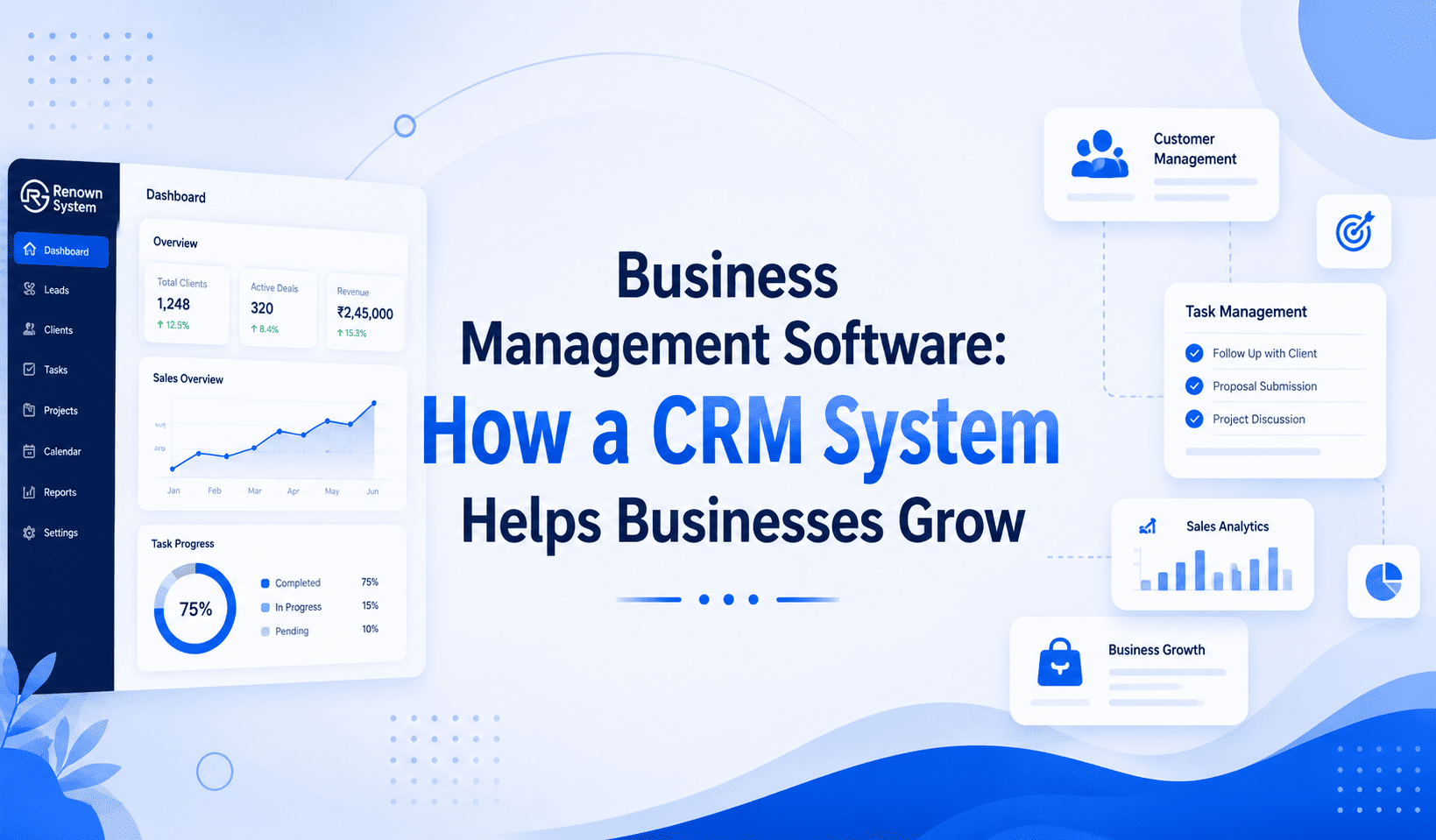
A modern CRM platform such as Renown System combines customer relationship management with broader business management capabilities, providing businesses with a centralized environment for managing customers, employees, projects, tasks, sales, invoices, tickets, and other essential operations.
What Is Business Management Software?
Business Management Software is a digital platform designed to help organizations manage and coordinate different business processes from one centralized system. Instead of relying on multiple tools for different departments, businesses can use an integrated platform to maintain information and workflows in one place.
For growing companies, this centralized approach can improve visibility across departments. Managers can monitor activities, teams can collaborate on tasks, and businesses can maintain organized customer and operational information.
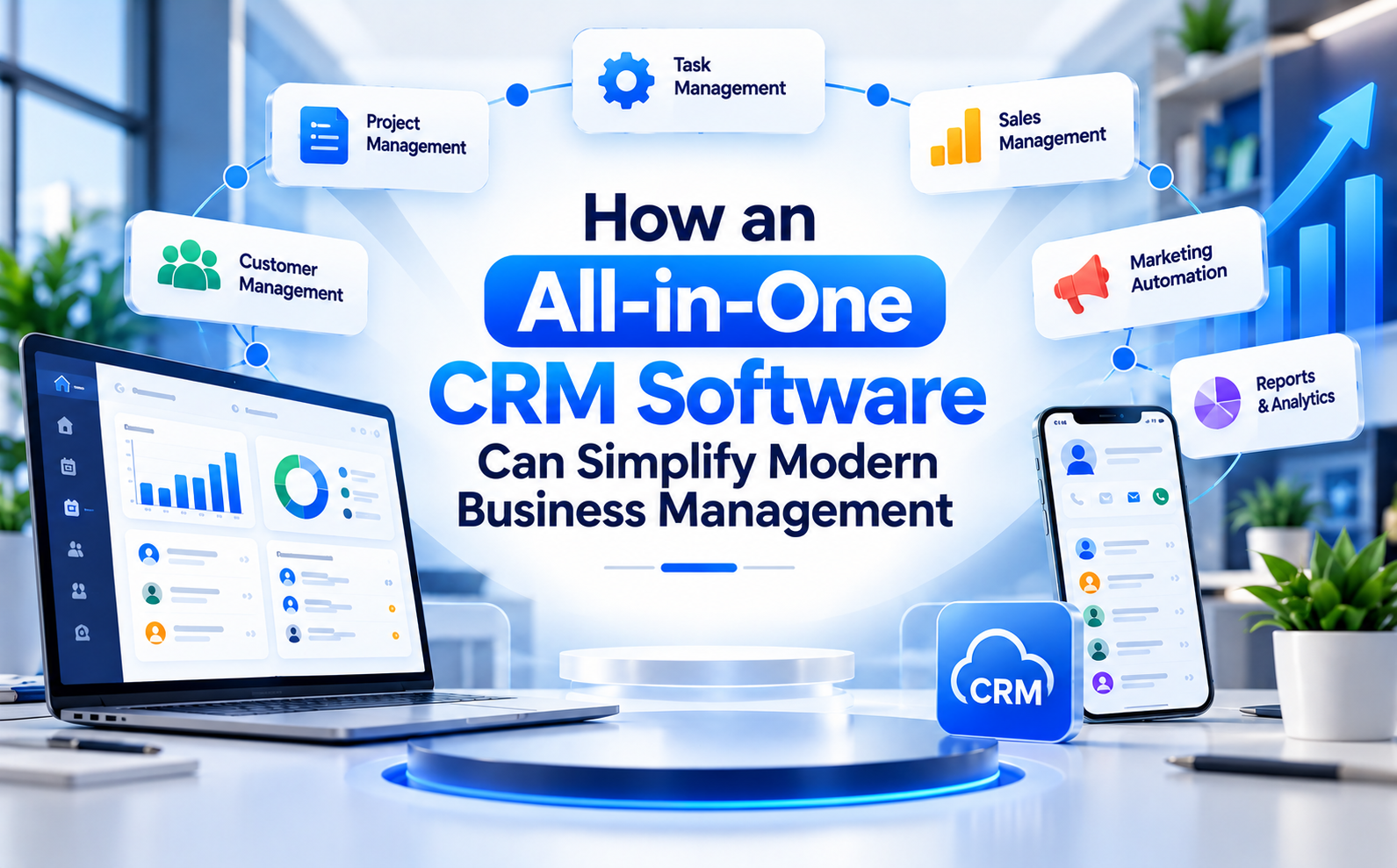
A comprehensive business management platform may include features such as:
- Customer and client management
- Employee management
- Task and project management
- Sales management
- Invoice management
- Ticket management
- Payroll management
- Leave management
- Onboarding management
- Reporting and analytics
By connecting these functions, businesses can create more structured workflows and reduce dependency on scattered systems.
Why Businesses Need a Customer Relationship Management System
Customer relationships are at the center of long-term business growth. However, maintaining customer information manually becomes increasingly difficult as the number of leads and clients increases.
A Customer relationship management system helps businesses organize customer information, interactions, sales activities, follow-ups, and related tasks in a centralized environment.
Instead of searching through emails, spreadsheets, and separate communication channels, employees can access relevant customer information from a single platform. This can help sales and support teams respond more efficiently while giving managers better visibility into customer-related activities.
A CRM system can also help businesses establish a more consistent approach to lead management and customer communication.
CRM System for Client Management
Client management becomes particularly important when businesses handle multiple customers, projects, conversations, and follow-ups simultaneously.
A CRM system for client management helps organizations maintain structured client information and manage customer-related activities more efficiently. Teams can use centralized client data to understand ongoing relationships, track activities, coordinate tasks, and maintain better communication.
For example, when a sales representative needs to follow up with a potential customer, having organized information about previous interactions can make the conversation more relevant. Similarly, project and support teams can benefit from having access to important client information without repeatedly requesting details from other departments.
This centralized approach can help businesses improve consistency, reduce information gaps, and create a more organized client management process.
How Business Management CRM System Improves Productivity
A Business management CRM system goes beyond traditional customer relationship management. It connects customer-related activities with internal business processes, allowing teams to manage multiple functions through one platform.
Here are some important ways it can support business productivity.
1. Centralized Business Information
One of the biggest challenges for growing businesses is fragmented information. When customer data, employee details, project information, invoices, and tasks are stored in different systems, finding the right information can take valuable time.
A centralized CRM creates a common source of business information, helping authorized users access relevant data more efficiently.
2. Better Team Collaboration
Different departments often work on interconnected activities. Sales may generate a client opportunity, operations may handle the project, finance may manage invoices, and support teams may handle customer requests.
A connected business management platform can improve communication between these teams by providing greater visibility into shared activities and information.
3. Improved Task and Project Management
Missed deadlines and unclear responsibilities can affect business performance. Task and project management capabilities help teams assign responsibilities, monitor progress, and maintain visibility over ongoing work.
Managers can use structured workflows to understand what has been completed, what is pending, and where attention may be required.
4. More Efficient Sales Management
Sales teams need visibility into leads, opportunities, customer interactions, and follow-ups. CRM functionality can provide a structured environment for organizing these activities.
By keeping sales information centralized, businesses can reduce the risk of missed follow-ups and provide sales managers with better visibility into pipeline activity.
5. Streamlined Customer Support
Customer support plays an important role in customer satisfaction and retention. Ticket management functionality can help businesses create, assign, monitor, and resolve customer requests through an organized workflow.
This makes it easier for teams to track support activities and maintain accountability.
6. Data-Driven Business Decisions
Business decisions are stronger when they are supported by accurate information. Reporting and analytics can help managers understand business activities, monitor performance, and identify areas that require improvement.
Instead of relying entirely on assumptions or manually prepared reports, businesses can use centralized information to gain better operational visibility.
Key Features to Look for in Business Management Software
Choosing the right software requires more than looking at the number of features. Businesses should consider whether the platform can support their current processes and future growth.
Important capabilities to consider include:
Centralized CRM: Customer and business information should be organized in one accessible platform.
Task Management: Teams should be able to create, assign, and monitor tasks efficiently.
Project Management: Businesses should have visibility into project progress, responsibilities, and deadlines.
Employee Management: Managers should be able to organize employee information and related activities.
Invoice Management: Businesses can benefit from tools for creating, tracking, and managing invoices.
Ticket Management: Customer requests should be organized through a structured support workflow.
Reports and Analytics: Managers should have access to useful information for monitoring business performance.
Scalability: The platform should be able to support businesses as their teams, clients, projects, and operations expand.
Renown System brings many of these capabilities together in one platform, with modules covering employee management, client management, tasks, projects, invoices, tickets, payroll, onboarding, leave management, and sales.
Why Choose Renown System?
Renown System is designed as an all-in-one CRM and business management platform for organizations looking to connect sales, operations, customer management, and workforce processes.
The platform provides a centralized data hub, collaborative workflows, and real-time synchronization across modules. It is designed to help businesses reduce fragmented processes and create greater visibility across their operations.
Renown System also focuses on ease of setup, automation-driven workflows, scalability, and cloud-based business management. Its platform supports features such as automated task assignments and reminders, workflow notifications, reports, multi-user functionality, and role-based access controls.
For businesses searching for a solution that combines CRM capabilities with broader operational management, this integrated approach can provide a more structured way to manage everyday activities.
How to Choose the Right CRM and Business Management Platform
Before selecting software, businesses should evaluate their specific requirements. Start by identifying the processes that currently consume the most time.
Ask questions such as:
- Are customer details stored across multiple locations?
- Are sales follow-ups being missed?
- Do employees have difficulty tracking assigned tasks?
- Are projects managed through spreadsheets?
- Is customer support difficult to monitor?
- Are managers spending too much time creating manual reports?
- Do different departments use disconnected systems?
If several of these challenges apply to your business, implementing an integrated CRM and business management platform may help create a more organized workflow.
Conclusion
The right Business Management Software can help organizations move away from disconnected tools and manual processes toward a more centralized and structured way of working.
A reliable Customer relationship management system can improve customer data organization, communication, sales visibility, and follow-up management. At the same time, a CRM system for client management can help businesses maintain stronger relationships by keeping important client information and activities organized.
For organizations looking for broader functionality, a Business management CRM system can connect customer management with sales, projects, employees, tasks, invoices, support, and other business operations.
Renown System provides an all-in-one platform designed to bring these functions together, helping businesses improve operational visibility, team collaboration, and productivity from one centralized system.
If your business is ready to simplify its daily operations and manage customers, teams, projects, and workflows from one platform, explore Renown System and discover how an integrated CRM approach can support your business growth.